
Wood Decks
Wood Deck Construction in North Jersey That Holds Up
Most wood decks in North Jersey fail because of what’s underneath. Shallow footings shift. Loose framing flexes. You feel it after the first winter when boards start separating and fasteners start backing out.
MSP Deck Builders builds for load, moisture, and seasonal movement first, then finishes the surface so it actually gets used.
What North Jersey Weather Actually Does to a Deck
North Jersey deals with humid summers, steady rainfall, and freeze-thaw cycles through winter. That combination expands and contracts wood, traps moisture in framing, and loosens connections over time.
Footings are set to meet New Jersey requirements, usually around 36 inches deep or more depending on soil. In some areas, especially older properties, mixed fill and compacted clay shift more than expected once winter hits.
Framing is spaced tighter than standard so the deck doesn’t flex under temperature swings. Hardware is selected for corrosion resistance because water sits longer than most people expect after storms and snowmelt.
Skip that and the structure starts breaking down early.
Material Stance
Pressure-treated lumber is the budget route. It holds structurally, but in North Jersey’s humidity it twists, cracks, and stains unevenly after a few seasons. On tree-lined streets, shade and moisture make that worse.
Cedar handles moisture swings better and ages more evenly. It still needs sealing, but it doesn’t fight the structure the way cheaper lumber does.
Hardwoods like ipe or mahogany cost more upfront and take longer to install, but they hold shape and resist wear far better. If the goal is long-term use without constant repairs, this is where it makes sense.
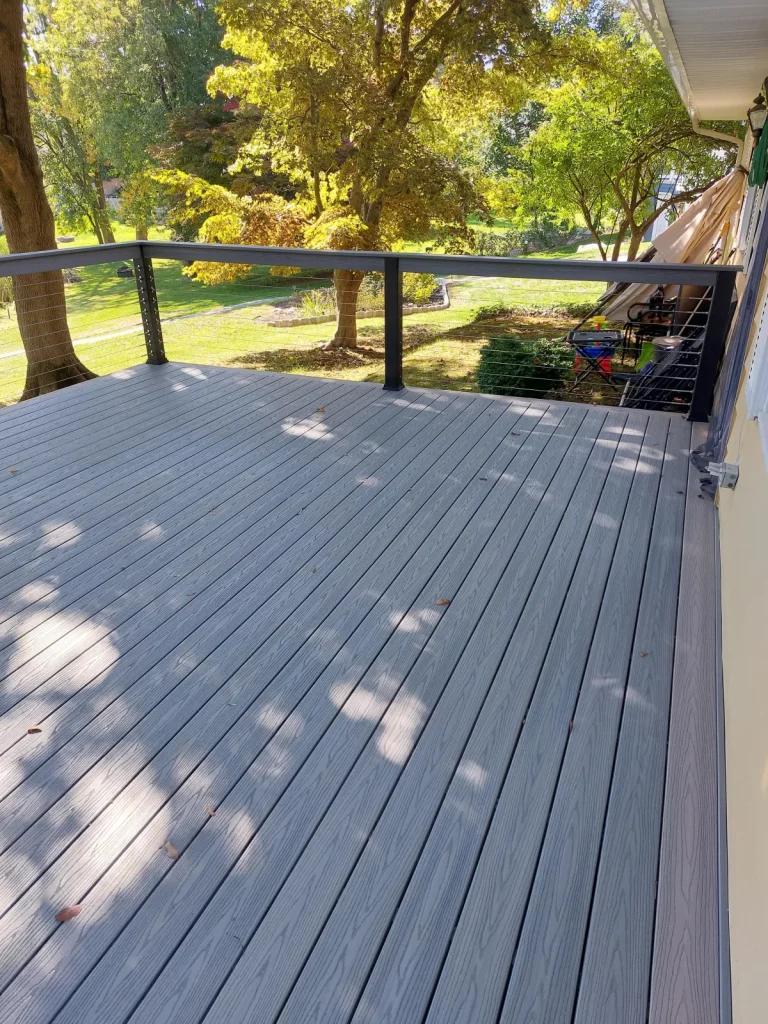
The MSP North Jersey Build Method
Every deck follows the same build logic, adapted on-site:
- Footings placed based on actual soil conditions, not assumptions
- Framing tightened beyond minimum spacing to reduce long-term movement
- Drainage corrected before installation, not after problems show up
- Load zones reinforced where foot traffic concentrates
It’s built to deal with moisture, movement, and daily use at the same time.
Layout That Fits Real North Jersey Properties
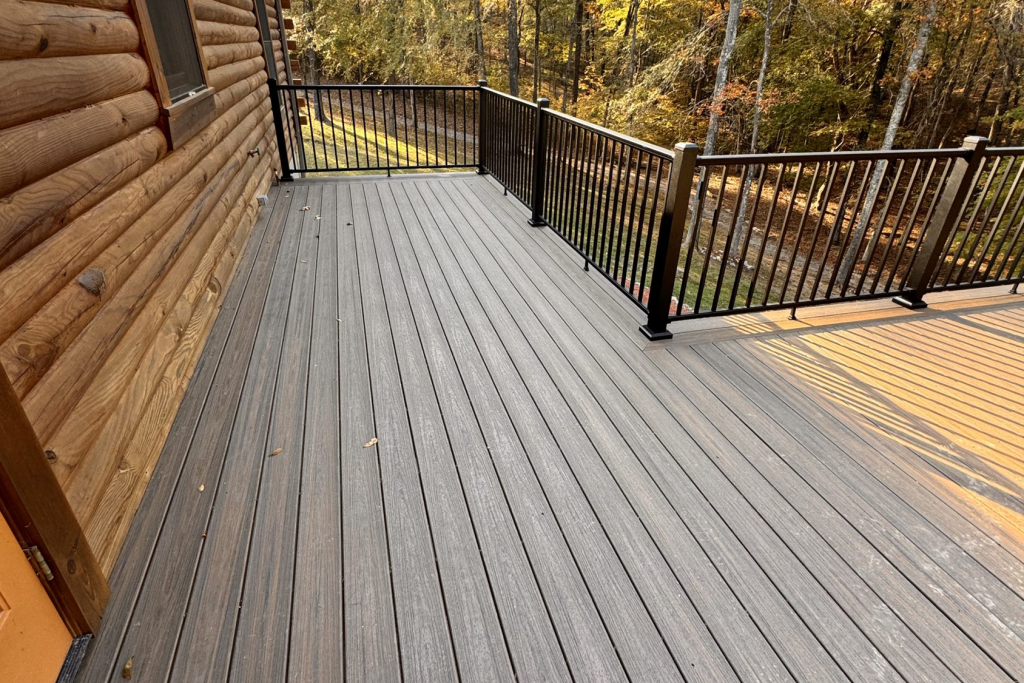
Flat layouts ignore how these properties are actually used.
In Paterson, space is tighter and often shared. Multi-family homes need separate access so traffic doesn’t stack into one entry. Older homes weren’t built with outdoor flow in mind, so layouts have to work around existing structures.
Move further out toward Ringwood or Vernon, and the problem shifts. Yards get larger but slopes become the issue. That means raised decks, longer spans, and stair placement that follows natural movement paths.
If the layout feels forced, it was designed off-site.
Details That Affect Safety and Longevity
Railings, stairs, and drainage get decided early.
Wood railings match the structure. Metal balusters open sightlines. Stair placement matters more here because ice buildup changes how people move during winter mornings.
Drainage is where most decks in this region start failing. A lot of properties weren’t graded with decks in mind, so runoff ends up sitting under the structure unless it’s redirected.
Stain isn’t optional. It slows moisture absorption and surface breakdown. Clear sealers look fine at first, then fade unevenly within a year under sun and rain.
What the Deck Actually Becomes
In a lot of North Jersey homes, the deck isn’t extra space. It’s where people end up spending time once the weather turns.
Small backyards rely on it to open things up. Larger properties use it to break space into usable zones. Either way, if it flexes or starts shifting, people stop using it the way they planned to.
When it’s built right, it feels like part of the house.
Maintenance Expectations in North Jersey
Wood decks need upkeep.
Clean once or twice a year, especially after winter. Re-stain every 2 to 3 years. Replace boards that start cupping or cracking from repeated moisture cycles.
Stay on top of it and the structure lasts. Ignore it and repairs stack up fast.
How MSP Deck Builders Builds Across North Jersey
Every project starts on-site. No pre-set assumptions.
A project near the Great Falls National Historical Park sat on a slope that pushed runoff straight under the framing after heavy rain. Standard spacing would’ve loosened within a year. The framing was tightened and drainage redirected before installation.
Another job on a two-family property near Market Street required separate access points without turning the deck into a choke point. That meant splitting stair placement and reinforcing high-traffic zones.
In more rural areas, builds deal with longer spans and elevation changes instead of tight access. Different problem, same approach.
Materials are sourced locally through Kamco Supply of NJ and Jefferson Lumber & Millwork to match availability and conditions.
The result is a deck that stays level, feels solid, and holds up across different property types.
Get a Quote in North Jersey
If the structure isn’t built for moisture, load, and seasonal movement, it won’t last here.