
Composite Decks
Composite Decks in North Jersey That Stay Consistent
Composite costs more at install. In North Jersey, you’re usually looking at 20% to 35% above pressure-treated wood depending on layout and board line.
That gap shrinks once upkeep starts adding up.
What North Jersey Weather Does to Decking
Humidity, steady rain, then freeze-thaw in winter. Wood takes on water, expands, then dries out unevenly. A season or two in, you start noticing it underfoot. Slight give, uneven boards, fasteners backing out.
Composite doesn’t take in moisture the same way. After a full winter, the surface feels the same as it did at install.
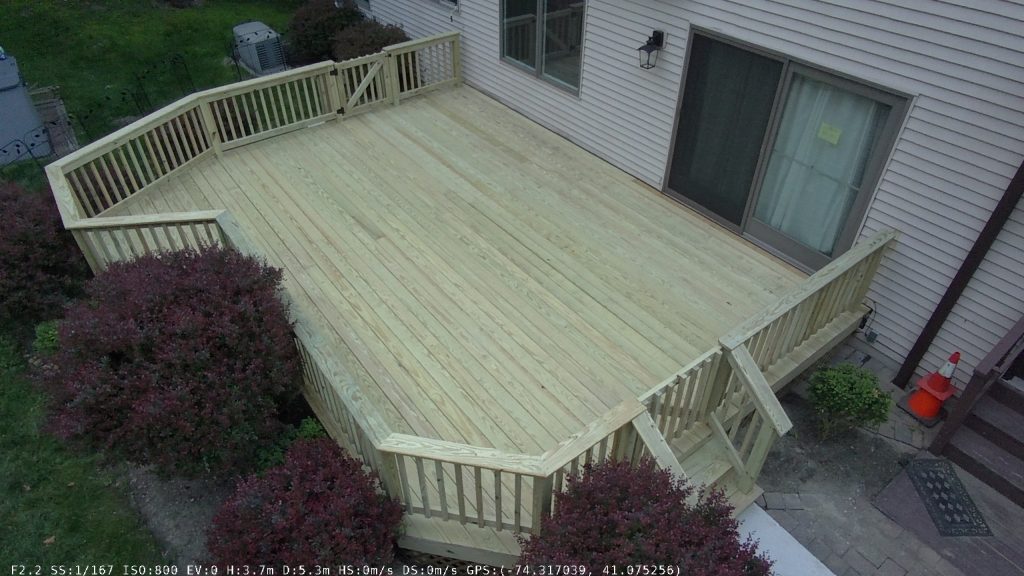
Built for Moisture and Seasonal Movement
Composite resists rot, insects, and surface breakdown. You don’t get the same twisting or splitting that shows up in exposed lumber after a few cycles.
Structure still decides the outcome.
Footings go below frost depth, usually around 36 inches here depending on soil. In parts of Paterson, older fill and compacted clay shift more than expected, so footing placement gets adjusted on-site. Joists are spaced tighter to reduce flex. Drainage is planned so water moves away from the frame instead of sitting under it.
If that part is off, the surface won’t stay right.
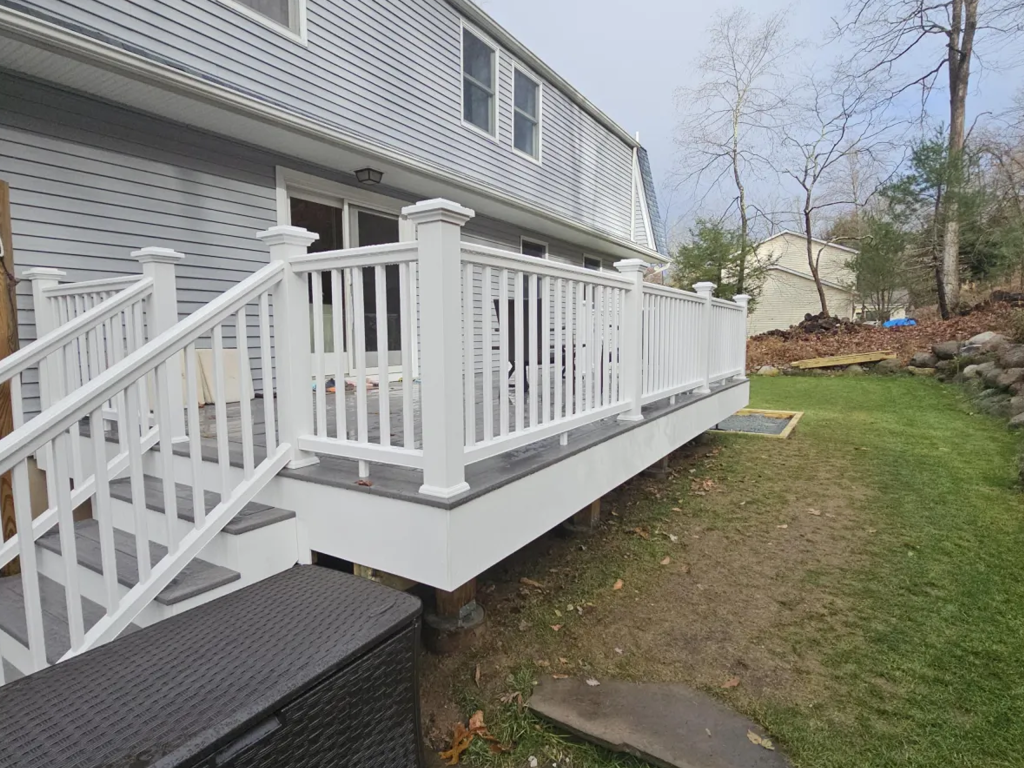
Low Maintenance That Actually Stays Low
Wood puts you on a loop. Clean, sand, stain, repeat.
Composite cuts that down to washing and the occasional scrub after heavy use.
No peeling coatings. No patchy fade from sun and shade. No boards soaking water and drying out at different rates.
Material Options and What They’re Made From
Boards from Trex, TimberTech, and Fiberon use blends of recycled plastics and wood fibers. That mix is why they resist moisture while still keeping a wood-like texture.
Higher-end lines hold colour more evenly across partial shade, which matters on properties where buildings or trees block light for part of the day.
Cost Over Time
Composite installs higher. Wood installs lower but carries ongoing cost.
Staining a wood deck here usually runs every 2 to 3 years. A typical job lands around $900 to $1,600 depending on size and condition. Over seven years, that’s multiple rounds plus cleaning, small repairs, and replacing boards that didn’t handle moisture well.
That total starts catching up.
Around year six to eight, the avoided maintenance usually offsets the initial difference. After that, costs stay flatter with composite.
How This Plays Out on Real Properties
On a backyard in Paterson, a deck sat between two buildings with limited sun. Wood in that position would’ve stayed damp longer and darkened unevenly. Composite from Trex kept the surface consistent, even with uneven exposure.
Another build had to wrap around an existing above-ground pool. That meant tighter framing, custom board cuts, and keeping spacing consistent across curves so nothing shifted over time. Composite handled that without boards pulling out of alignment after seasonal movement.
On a sloped yard in Ringwood, runoff moved toward the structure after rain. Instead of placing boards over the problem, grading and drainage were corrected first. The result was a deck that stayed dry underneath, not one that trapped moisture and started breaking down early.
Different constraints, same approach. Fix the conditions first, then build.
Local Code and Permit Reality
Decks in this region still fall under structural and zoning requirements.
In Paterson, that means checking setback distances, height limits, and how much of the lot can be covered. Raised decks often trigger more review because of load and attachment to the home.
Permits, inspections, and approvals are handled before build starts so there’s no mid-project stop.
Where Composite Makes Sense
Raised decks exposed to rain and snow
Backyards that get regular use
Homes where ongoing upkeep isn’t something you want to deal with
Wood still fits if you want a natural surface and don’t mind the maintenance cycle.
Composite fits if you want a deck that stays consistent without turning into a recurring job.
Get a Quote in North Jersey
If you want a deck that stays stable through moisture and seasonal change without constant upkeep, build it once with the right structure and material.