
Pergola
Pergolas in North Jersey That Age Well
Vinyl pergolas look clean on install day. Within a season, the surface starts to give it away. The shine feels out of place, posts flex in wind, and once it gets scratched there’s no clean way to fix it.
In North Jersey builds, material choice shows fast because of humidity, rain, and seasonal shifts.
What Works in North Jersey
Cedar and high-grade composite are the two that keep their shape and finish here.
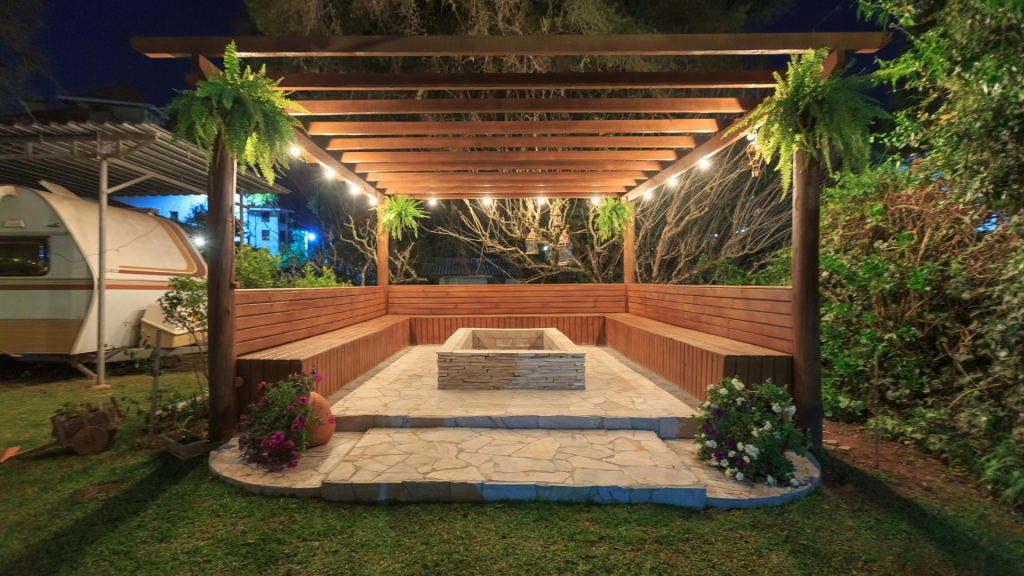
Cedar fits older homes across Paterson and nearby towns. Brick facades, aging trim, and tree cover all pair better with a natural material. Left untreated, cedar fades into a muted grey. If stained, plan on recoating every couple of seasons since moisture and temperature swings wear that finish down.
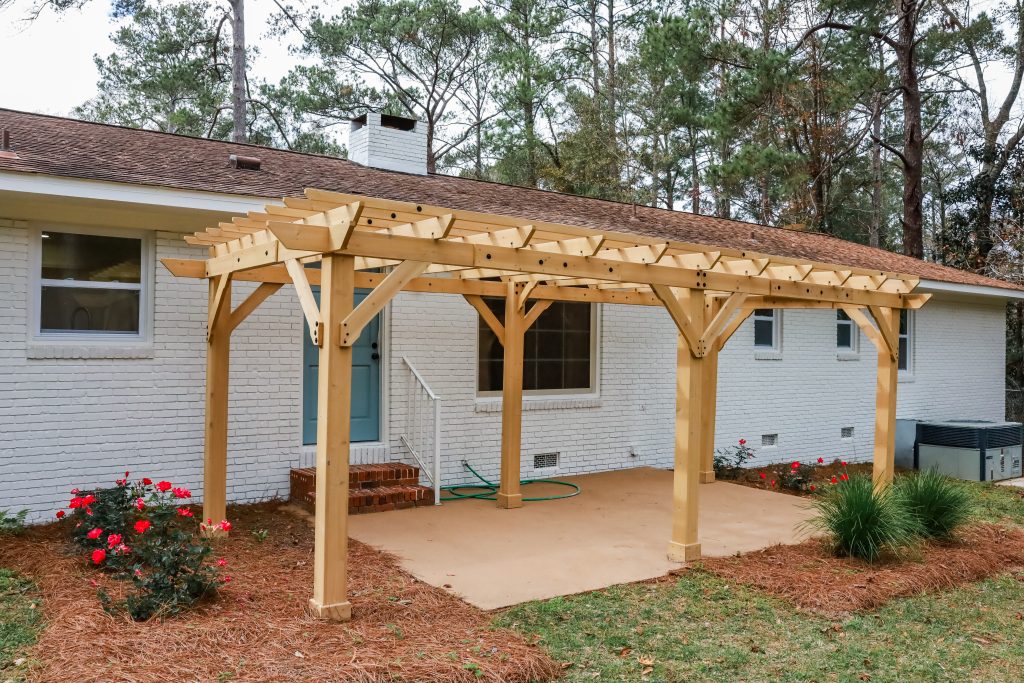
Composite holds colour and surface far more consistently. Systems from Trex, TimberTech, and AZEK are used because they resist moisture absorption, don’t splinter, and keep a uniform finish across sun and shade. That matters on properties where one side of the structure stays damp longer than the other.
What Works in North Jersey
Cedar and high-grade composite are the two that keep their shape and finish here.
Cedar fits older homes across Paterson and nearby towns. Brick facades, aging trim, and tree cover all pair better with a natural material. Left untreated, cedar fades into a muted grey. If stained, plan on recoating every couple of seasons since moisture and temperature swings wear that finish down.
Composite holds colour and surface far more consistently. Systems from Trex, TimberTech, and AZEK are used because they resist moisture absorption, don’t splinter, and keep a uniform finish across sun and shade. That matters on properties where one side of the structure stays damp longer than the other.
What Actually Breaks Down
Pressure-treated wood gets used because of cost. Structurally it can work, but exposed pergolas in this region show wear quickly.
You’ll start seeing rafters twist out of line, ends split, and fasteners loosen as the wood dries unevenly after rain and heat cycles.
Vinyl doesn’t rot, but it reads artificial once you notice seams and movement. In direct sunlight, the reflection doesn’t match surrounding materials.
Structure Over Material
Material doesn’t fix a weak build.
Posts still need to go below frost depth, typically around 36 inches here depending on soil and local code interpretation. In parts of Paterson, older fill and compacted clay shift more than expected, which affects how those footings perform over time.
Beams need to carry seasonal load. Rafter spacing needs to balance shade with airflow so the structure doesn’t trap moisture.
If that part is wrong, even high-end composite starts to show alignment issues.
The MSP North Jersey Build Method
Each pergola follows the same approach, adjusted to the site:
- Footings placed based on soil conditions found on-site
- Framing sized for load and long-term stability
- Rafter layout planned for shade without trapping moisture
- Drainage handled before posts are set
- Electrical planned to pass inspection without rework
The difference shows after a couple of seasons, not just at install.
How This Gets Applied on Real Projects
On a tighter property in Paterson, a pergola build had to work within limited yard depth and shared boundary lines. Instead of centering the structure, the layout shifted to maintain setback clearance and create a usable path along one side. Composite from TimberTech was used to avoid uneven fading caused by partial shade from nearby buildings.
On a sloped property in Ringwood, the issue wasn’t space but elevation. Posts were set deeper and braced to prevent lateral movement, with beam spans adjusted to keep the structure level across grade changes.
In Vernon, a larger yard allowed more flexibility, but wind exposure became the problem. Reinforced connections and tighter rafter spacing reduced movement without closing off the space.
Different layouts, same method applied based on the constraint that matters most.
Integrated Details That Don’t Look Added Later
Lighting and fans get planned before installation.
Wiring runs inside posts and beams with proper conduit. Fixtures sit flush instead of hanging loose. Connections stay hidden so the structure reads as one piece.
Fans mount to reinforced framing so they don’t shift in wind. Lighting is spaced across rafters to avoid uneven coverage.
Local Code and Permit Reality
Pergolas in this region still fall under accessory structure rules. That means zoning checks, setback compliance, and inspections before completion.
In Paterson, that includes verifying placement against property lines, staying within height limits, and meeting structural expectations tied to load and footing depth. Skipping this usually leads to delays or revisions mid-build.
The process is handled upfront so the structure passes inspection without changes.
Where Each Material Fits
Cedar works in older neighbourhoods, tree-heavy yards, and properties where natural materials already dominate.
Composite works in newer builds, cleaner layouts, and spaces where consistent appearance matters across seasons.
Vinyl tends to fall off once the structure settles and the surface starts showing wear.
Get a Quote in North Jersey
Pick the material based on how it will hold up over time. Cedar if you’re fine maintaining it. Composite if you want a consistent finish without ongoing rework. Skip vinyl.