Gazebos in North Jersey That Pass Inspection and Stay Solid
A gazebo changes how a backyard gets used. Without cover, most spaces sit empty once the weather turns. With the right structure, people stay outside longer, even after rain or during colder months.
The part that usually gets skipped is what it takes to get it approved and keep it stable after a few seasons.
Permits and Local Requirements in North Jersey
Across North Jersey, a gazebo is treated as an accessory structure. That brings permits, site plans, and inspections into the process early.
In Paterson, setback distances, height limits, and lot coverage rules all apply. Rear and side setbacks often fall in the 5 to 10 foot range, but zoning shifts depending on the property.
Nearby towns like Wayne and Clifton enforce their own variations. Height increases or oversized structures can trigger additional review.
Skipping this step usually leads to redesigns or failed inspections.
Snow Load and Structural Reality
North Jersey still sees winter load. The structure has to carry weight without drifting out of alignment.
Roof pitch affects how long snow sits. Flatter roofs hold it longer. Steeper pitches clear faster and reduce stress on the frame.
Footings are typically set around 36 inches deep or more depending on soil. Older properties can sit on mixed ground that shifts more than expected.
Ignore that and you’ll see sagging, shifting posts, and alignment issues after a couple of winters.
The MSP North Jersey Build Method
Every gazebo follows the same process, adjusted on-site:
Site plan checked against zoning before work starts
Footings set based on soil conditions
Framing sized for load and stability
Drainage handled before installation
Electrical planned to pass inspection
Placement on a Real Property
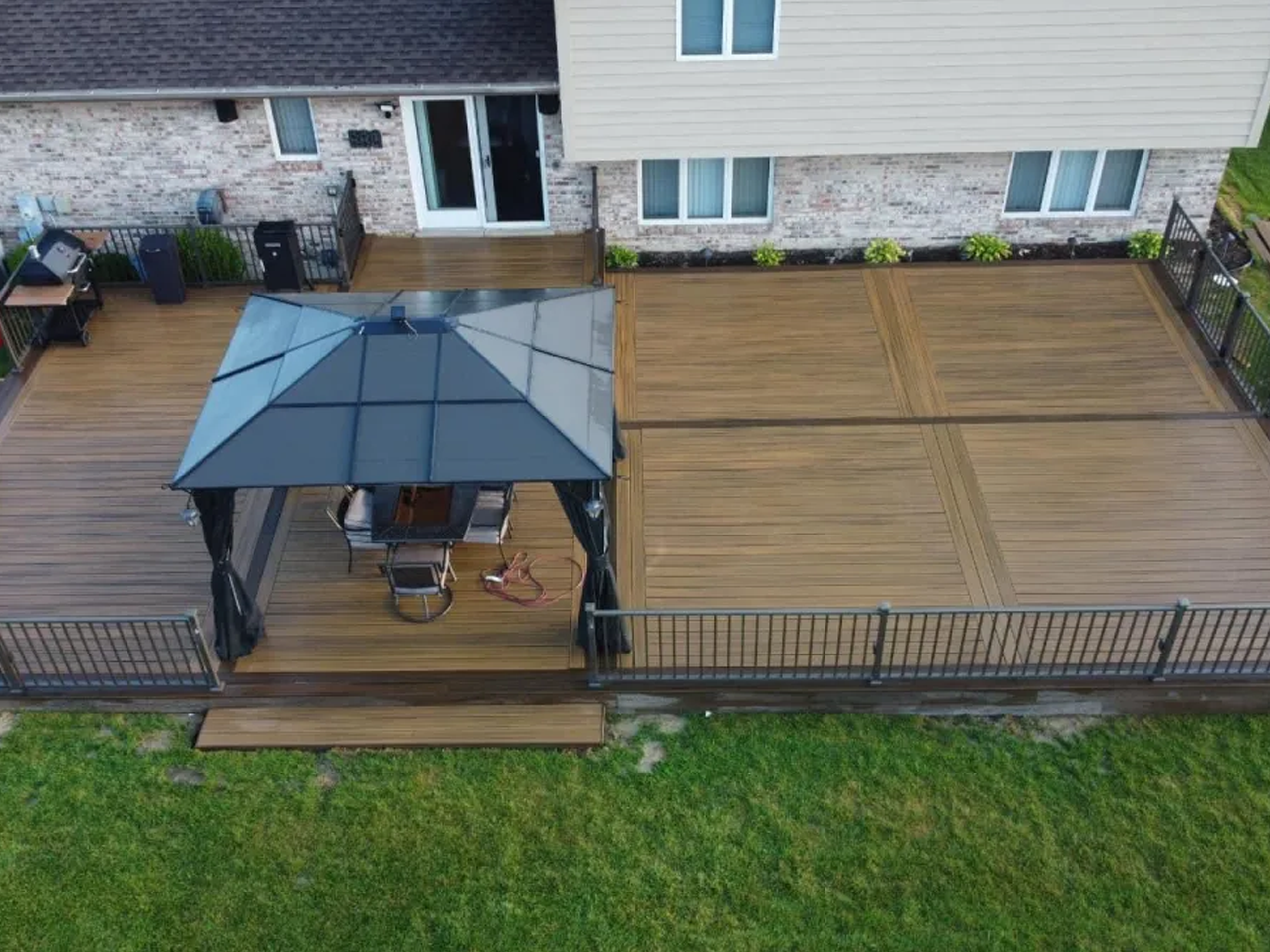
Gazebo placement changes everything.
It has to clear property lines, avoid easements, and stay out of runoff paths. A lot of homes weren’t designed with backyard structures in mind, so placement has to adapt.
Tighter properties in Paterson usually push structures toward the rear while keeping usable access. Larger or sloped properties in Ringwood or Vernon deal more with elevation and grading.
Roof and Material Choices
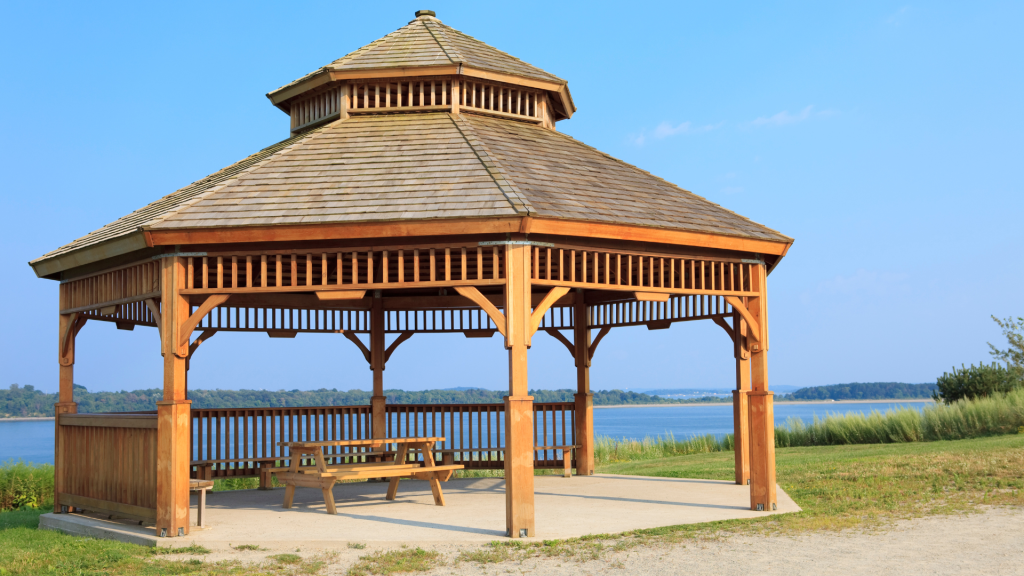
Cedar and composite are the common choices.
Cedar fits older homes and handles moisture better than basic lumber, but it needs sealing every couple of seasons. Composite holds its finish longer and reduces maintenance.
Roofing matters more than most people expect.
Asphalt shingles match the house. Metal sheds water and snow faster. Polycarbonate panels bring in light but don’t fully protect against weather.
Built-In Details That Pass Inspection
Wiring runs through posts and beams with proper conduit. Outdoor-rated fixtures and GFCI protection get checked.
Fans mount to reinforced framing. Lighting is spaced evenly.
Screens and panels are built into the structure, not added later.
What the Space Turns Into
Once it’s built right, people actually use it.
Meals don’t get cut short by weather. Evenings stay outside longer. On smaller properties, this becomes the only covered space that works consistently.
How MSP Deck Builders Handles Gazebos
On a property near the Great Falls National Historical Park, runoff was pushing water under the structure. The layout shifted and drainage was corrected before build.
On a two-family property, access was split so the space didn’t become crowded.
Materials are sourced through Kamco Supply of NJ and Jefferson Lumber & Millwork.
Get a Quote in North Jersey
If it’s not built to pass permits and handle moisture, it won’t last.